Ratolojanahary, M
January 6, 2021
Information:
Quick Glance:
Notes: Political Geography |
|||
|---|---|---|---|
Home Page // MOOC // Assignments Page // Notes1 // Notes2 // Notes3 // Paper Page // Links Page // Books // |
|||
| Date: | Notes: | Grade: | |
| Power Point Presentations | |||
| Week 1 | December 28, 2020 | Global studies or international studies attempts to understand the world by looking at it from multiple perspectives (multidisciplinary): history, political science, international relations, economics, sociology, etc.
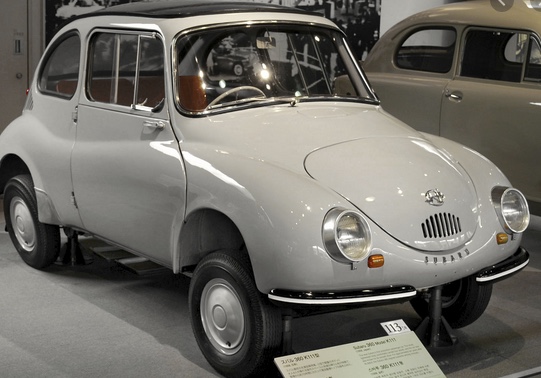
A small number of the Japanese cars were first
Malcolm N. Bricklin (born March 9, 1939) is an American businessman, widely known for an unorthodox career spanning more than six decades with numerous prominent failures and successes — primarily manufacturing or importing automobiles to the United States, ultimately starting over thirty companies. He founded Subaru of America. He also was into francising. Subaru 360
Multidisciplinary is where you draw among many perspectives.
Globalization A complex web
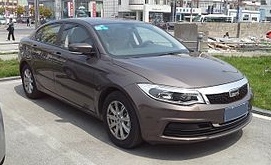
Qoros Auto Co., Ltd. is a Chinese automotive manufacturing company headquartered in Shanghai.
Cars are made in the area of China: Changshu
TATA motors owns Jaguar and Jaguar and they are made in China. Video
The Fourth Industrial Revolution (or Industry 4.0) is the ongoing automation of traditional manufacturing and industrial practices, using modern smart technology.
At the World Econimic Forum in 2016 they had talks about the 4th Industrial Revolution.
The Job Reset Summit Oct. 2020.
DRC:Cobalt--Key ingredient for iPhone batteries, batteries, etc. They own 80 percent of the world supply.
Moore's Law: The rapid pace of technological change that occured in the late 20th Century.
The 1999 Seattle WTO protests, sometimes referred to as the Battle of Seattle, were a series of protests surrounding the WTO Ministerial Conference of 1999, when members of the World Trade Organization (WTO) convened at the Washington State Convention and Trade Center in Seattle, Washington on November 30, 1999
Bretton Woods Conference An attempt to establish common rules for financial and commercial global transactions. By regulating the international monetary system, the industrial powers that met in 1944 in Bretton Woods sought to prevent the economic policies that led to the global depression of the 1920s–30s. Bretton Woods laid the foundation for three new international economic institutions that would exert tremendous influence over the international economy.
Neoliberals argue that deregulation and privatization of state-owned enterprises and limited government involvement in the economy as the best ways for countries’ economies to grow and individual freedoms to flourish.
The three economic institutions most commonly associated with economic globalization are the IMF, the World Bank, and the WTO, all of which emerged or evolved from the Bretton Woods system.
Structural adjustment programs (SAPs) consist of loans (structural adjustment loans; SALs) provided by the International Monetary Fund (IMF) and the World Bank (WB) to countries that experienced economic cris. s] The purpose is to adjust the country's economic structure, improve international competitiveness, and restore its balance of payments. Now: The poverty reduction stratagy because of the bad connotations from the late 90s repayment deamands.
A supranational organization is one that has been given the authority by its member nations to make decisions that take precedence over individual member nations’ policies. The supranational organization relies on nations to carry out its decisions because it usually lacks any enforcement powers of its own. International organizations, like the UN and the WTO, spread decision-making among member nation-states, and NGOs, such as Greenpeace.
Social cues, such as glares, ridicule, or looks of pity, are a far more common way of encouraging adherence to cultural norms.
Autarky: Complete economic independence.
Civil Rights : rights that individuals possess by virtue of their citizenship – for example, the right to free speech.
Social Class in America (1957)
Cosmopolitanism is the belief that all humans are connected and belong to one humanity.
Global studies courses and programs are often explicit in their goal of facilitating students’ development into active global citizens. |
|
| Week 2 | December 29, 2020 | Economic globalization refers to the intensification and stretchingof economic interrelations across the globe.
"Bretton Woods Conference": Held in BrettonWoods, New Hampshire from July 1 to July 22, 1944, Objective: create a system of rules, institutions, and procedures to regulate the international monetary system, and to prevent the global depression of 1920s –1930s. The purpose of the conference was to bring stability and adjustable exchange rate. Money is pegged to the US dollar which in turn is pegged to the dollar.
This newsreel excerpt briefly describes the international monetary conference of 1944 (before WW2 ended), held at the Mount Washington Hotel in Bretton Woods, New Hampshire. The conference founded the International Monetary Fund and the World Bank. The fixed exchange rate system created at the conference came under increasing strain in the 1960s and was ended unilaterally by President Nixon in 1971.
Lecture Dartmouth: It happened over three weeks. Two weeks after ww2 ending. The UN was created one year later. It was hard to trade with the barter system so this help with world trade. The silver and gold standard. Britian was the only country that challenged anything. 1947 Britian converted from silver to the gold standard. The reserve of the world. Keynes ,an Englishman and a jerk with a awful manner. American White was the other person at the table. At the conference the United States we were the largest creditors while Great Britian was the largest debtor.
Today, China is the largest creditor while the United States is the largest Debtor.
International Monetary Fund (IMF): Run by the Europeans? It is located in Washington DC. Its goal is to foster global monetary cooperation.
World Bank: Run by the Americans. It is located in Washington DC. It provides loans and grants.
World Trade Organization. This organization oversees international trade. It is located in Genevea, Switzerland.
In March 1971, the New Economic Policy was suspended. We no longer use the gold standard. They now float against each other.
Neoliberalism: Small government and free markets. This change expanded world trade.Free trade is limiting tariffs and reducing trade barriers.
temporal affairs Refers to secular, rather than sacred, matters.
The World Factbook provides information on the history, people and society, government, economy, energy, geography, communications, transportation, military, and transnational issues for 267 world entities.
Newest countries in the world.
US Department of State: Overseas Security Advisory Council. Gives news by country.
PRB: Population information. This is the population Reference Bureau.
Australian Department of Foreign Affairs and Trade
The Encomienda System was the enslavement of the Native Americans by Spain for the forced labor and mining of the colonies. Labor system. The military, etc. were given land in the new world but you still have to pay taxes to Spain. Also, sperad chritianity.
"access to native women was one of the tactics used to sell to
...rail lines usually did not connect cities, but rather ran from a mine to a port, facilitating the exportation of resources out of the country rather than commerce within it.
...One out of every 35 persons is an international migrant...Migrants make up roughly 3 percent of the global population.
IGOs are international organizations that nation-states join for specific purposes, such as promoting peace, enhancing trade, and encouraging cooperation.
...the International Criminal Court (ICC) . The ICC was designed to adjudicate matters once thought to be the sole jurisdiction of the nation-state: the behavior of heads of states, their officials, and other individuals..NGOs have become so powerful that their activities are seen as a new form of colonialism.
Table 2.1 The World’s 100 Largest Economies (2000)
67 Nissho Iwai 65,393.20
Apartheid
: A system of racial
segregation in South Africa. From 1948 to 1994, citizens were divided into the following groups: Blacks, Coloureds, Whites, and Indians. This distinction determined access to all services and accommodations. All groups except Whites were denied their civil and political rights. Whites who questioned the systemalso had their rights violated.
Shell Petroleum Development Company of Nigeria (SPDC)
Executive Outcomes had contracts with multinational corporations such as De Beers, Chevron, Rio Tinto Zinc and Texaco. The governments of Angola, Sierra Leone, and Indonesia were also clients.
The nation-state system emerged in seventeenth-century Europe with the Peace of Westphalia in 1648.
Transnational companies control much of the world’s investment capital, technology, and access to international markets. |
|
| Week 3 | December 30, 2020 | League of Nations Established by the Treaty of Versailles which ended World War I, this organization was designed to provide a forum for conflict dispute resolution, thereby preventing war.
The United Nations , or UN, founded in 1945 and headquartered in New York City, became the successor to the League. Like its predecessor. Secretary-General (UN) The official spokesperson for the UN.
Trusteeship Council -- The organ of the UN that was responsible for assisting with the transition of former colonies to independent countries. It went out of commission in 1994.
Secretariat --The administrative organ of the UN led by the Secretary-General.
Generally, peacekeeping has referred to the process whereby soldiers from nation-states not involved in a conflict are introduced into a conflict area to act as a buffer between conflicting forces, to maintain a ceasefire, or simply to maintain order so that humanitarian aid can be delivered to those in need.
The Maastricht Treaty, concluded in 1992 between the 12 member states of the European Communities, is the foundation treaty of the European Union (EU). A supranational organization is one that has been given the authority by its member nations to make decisions that take precedence over member nations’ policies.
Foreign Direct Investment (FDI)
FDI is defined as a cross-border investment involving a long-term relationship and acquiring a lasting management interest (10% or more of the voting stock) by a resident in one economy (investor) in an enterprise resident in an economy other than that of the foreign direct investor.
Branch: if its 100% owned by its immediate direct investor.
How FDI has changed in the past decade?
• Majority of FDI is made in the form of machinery, equipment and building.
• Recently, dramatic increase in the number of high tech companies: example companies whose primary product is an intellectual property right, such as a software program or software-based technology or process.
Child Education: Finland has a good education. 5.3 million people. We rank low in education.2008 The Chinese spend 2xs more time on homework. There are more Chinese speakers than English speakers.
The North Atlantic Treaty Organization (
NATO
) was established
African Union An organization of African states that is designed to promote peace, human rights, democracy, and inter-continental cooperation.
Universal Declaration of Human Rights Adopted by the United Nations in 1948, the declaration describes the rights to which all human beings are entitled. PDF The United States did sign this.
multinational corporations ( MNCs ) A corporation or enterprise that manages production or delivers services in more than one country.
Greenpeace does not like factory farming and Amnesty International is a organization that claims it uphold the Universial Declaration of Human Right |
|
| Week 4 | January 3, 2021 | Magana Carta: It is the rights agreed to by the King of England.
Habeas corpus This Latin phrase refers to a legal action which provides relief from arbitrary detention and allows those held in detention to be informed of the charges against them.
Abolitionist: Someone seeking the eradication of slavery.
Suffragists: Those who struggle for voting rights for women.
League of Nations : Established by the Treaty of Versailles, which ended World War I, this organization was designed to provide a forum for conflict dispute resolution, thereby preventing war.
United Nations International : organization founded to prevent war and to promote peace and international cooperation. Total membership in 2009: 192 nation-states. It was created after WW2.
General Assembly (UN): The organ of the UN that acts as its legislative branch.
Universalist: Someone who argues that human rights are universal and not dictated by culture. Thus, they argue that human rights are inherent in the individual – the same for everyone, everywhere.
International Criminal Court (ICC) : Coming into force in 2002, this permanent international court is designed to hear cases of gross violations of human rights, genocide, crimes against humanity, and war crimes. It is a court of last resort and will only act when nation-states cannot or will not. Hauge: The Netherlands.
Non-governmental organizations (NGOs): A legally constructed organization made up of individuals. These have a limited, if any, role for nation-states.
Non-governmental organizations (NGOs) A legally constructed organization made up of individuals. These have a limited, if any, role for nation-states.
Switzerland has stayed out of the EU. It feels comfortable pursuing its political and economical goals independent of the EU. It is not a part of the EU. It is part of the Schengen Agreement (to abolish border checks).
Bush meat Meat from wild animals. It is also often used to refer to the unsustainable and sometimes illegal killing of wildlife, particularly in tropical areas.
pH balance The measure of a solution’s acidity.
El Niño and La Niña El Niño refers to a warming of Pacific water that creates changes in climatic weather patterns, such as increased rain in some areas. La Niña refers to unusually cold water in the Pacific that likewise causes weather disruptions.
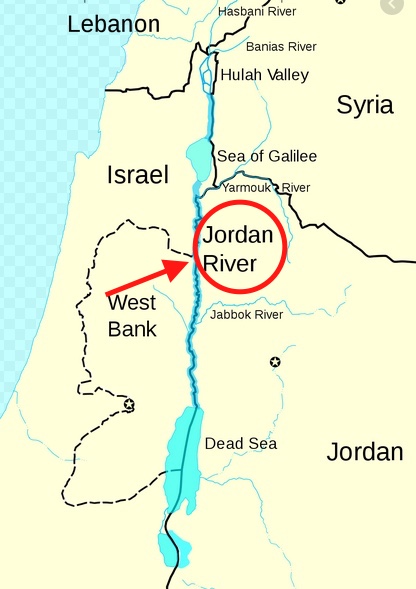
West Bank Refers to land on the West Bank of the Jordan river that has been central to the conflicts in the Middle East. Although made up primarily of Palestinians, much of the area has been controlled by Israel since 1967.
Lagoons Places where factory farms store animal waste.
Green Revolution An effort by scientists (1940s–60s) to engineer fewer improved strains of wheat and corn in order to increase food supplies in developing countries.
e-waste Surplus electronics that are not recycled – old computers, for example.
Zero population growth rate:Population neither grows nor declines
Negative growth rates: Indicates that population figures are declining.
The EU is Hong Kong’s 2nd largest trading partner overall (after China).
Trade dress=registered design.
Ethnocentric Viewing the world primarily from the perspective of one’s own culture.
gross domestic product (GDP) A measure of a country’s total output and national income in a year.
Industrial Revolution Refers to changes in economic and social organization that began around 1760 in England and later in other countries as the result of the replacement of hand tools with power-driven machines. It began in 1812 in the United States.
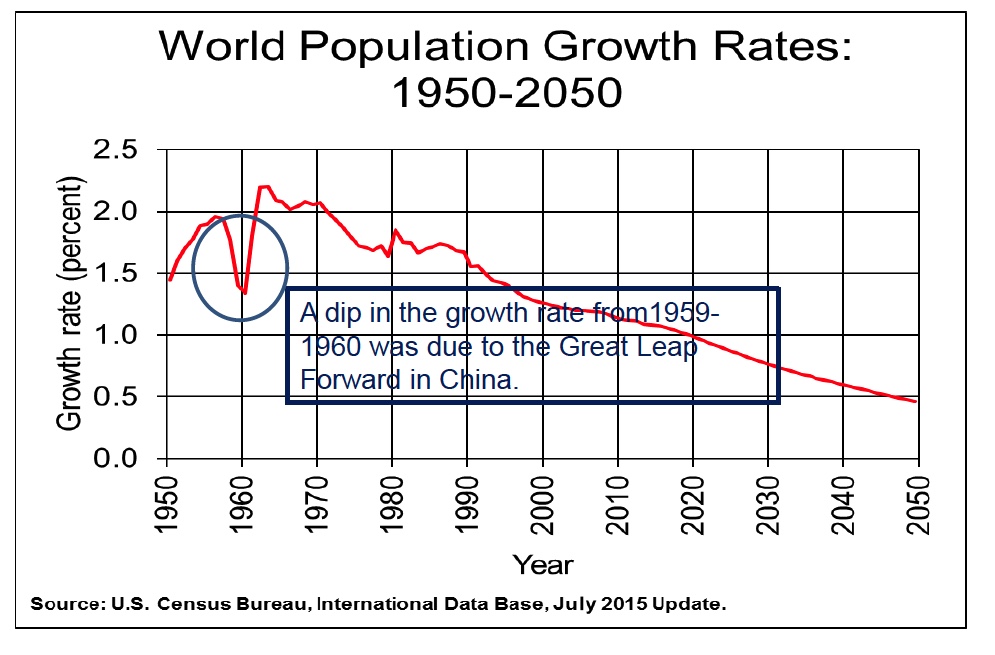
Great Leap Forward A political and social plan in China from 1958 to 1960 that was designed to transform China from an agrarian to an industrial society. Instead, it triggered a famine that left between 14 and 43 million dead.
Silk Road Ancient trade route linking Rome and China. The 4,000-mile route started at Sian, followed the Great Wall of China to the northwest, bypassed the Takla Makan Desert, climbed the Pamirs, crossed Afghanistan, and went on to the Levant, where merchandise was then shipped across the Mediterranean Sea.
|
|
| Week 5 | January 4, 2021 | ungendered Lacking any recognition or acknowledgement of gender.
Neoliberalism A rejection of Keynesian economic theory, which posited that the state must play an active role in a capitalist economy in order to level out the inevitable boom and bust cycles. Neoliberals argue that deregulation and privatization of state-owned enterprises and limited government involvement in the economy are the best ways for countries’ economies to grow and individual freedoms to flourish.
Marxists Followers of the economic and political theories of Karl Marx and Friedrich Engels who believe that capitalism exploits workers, that class struggle creates historical change, and that capitalism will ultimately be superseded by a classless society.
feudalism: The social and economic system that characterized European societies during the Middle Ages (9th to 15th centuries). The king owned the land and gave it to his leading nobles in return for their loyalty and military service. The nobles in turn allowed peasants to farm their land for a portion of their produce. |
|
| Week 6 | January 5, 2021 | Chemical Weapons Convention
The Nuremberg Trials (1945)--Nuremberg Code - Ethics of experimentation
Hague Convention for the Protection of Cultural Property in the Event of Armed Conflict
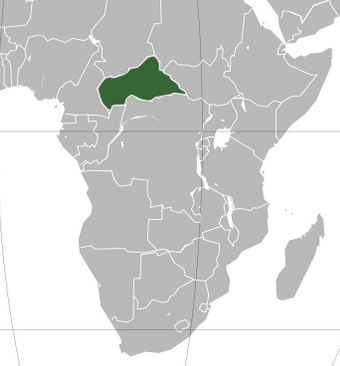
Blood Diamonds in The Central African Republic --Kimberley Process Cert and its main goal is to prevent conflict diamonds.
Central African Republic is mainly a Christian country. The second religion is Islam. It gained freedom in 1960. Its life expectancy is late 40s. There are missionary groups that go there to preach the gospel. The media is controlled by the government. The official language is French.
Blackwater was a private military company and it is now named Academi.
post-traumatic stress disorder (PTSD) An anxiety disorder that can develop after exposure to one or more traumatic events that threatened or caused physical or psychological harm.
Women’s Rights Convention in Seneca Falls The 1848 convention held to discuss the social, civil, and religious condition and rights of woman.
Plessey v. Ferguson The US Supreme Court case (1896) that upheld the policy of “separate but equal.” The court found racial segregation was constitutional.
Tokyo Tribunals War crimes trials for 25 Japanese defendants, seven of whom were sentenced to death. Thousands of other Japanese were charged with lesser crimes.
|
|
| Week 7 | January 6, 2021 | United Nations Security Council (UNSC) The 15-member organ of the UN that is responsible for maintaining peace and security. There are 10 rotating members who serve two-year terms and five permanent members who have veto power: US, Britain, China, Russia, and France.
United Nations Security Council (UNSC) The 15-member organ of the UN that is responsible for maintaining peace and security. There are 10 rotating members who serve two-year terms and five permanent members who have veto power: US, Britain, China, Russia, and France.
|
|
| Week 8 | January 6, 2021 | Why water might be a as source of conflict?
Agriculture: 65% of all the water removed from rivers, lakes, and aquifers
|
|
| Week 9 | January 6, 2021 | Illegal gold mining in the Amazon-- a lot of goldinthis area.
|
|
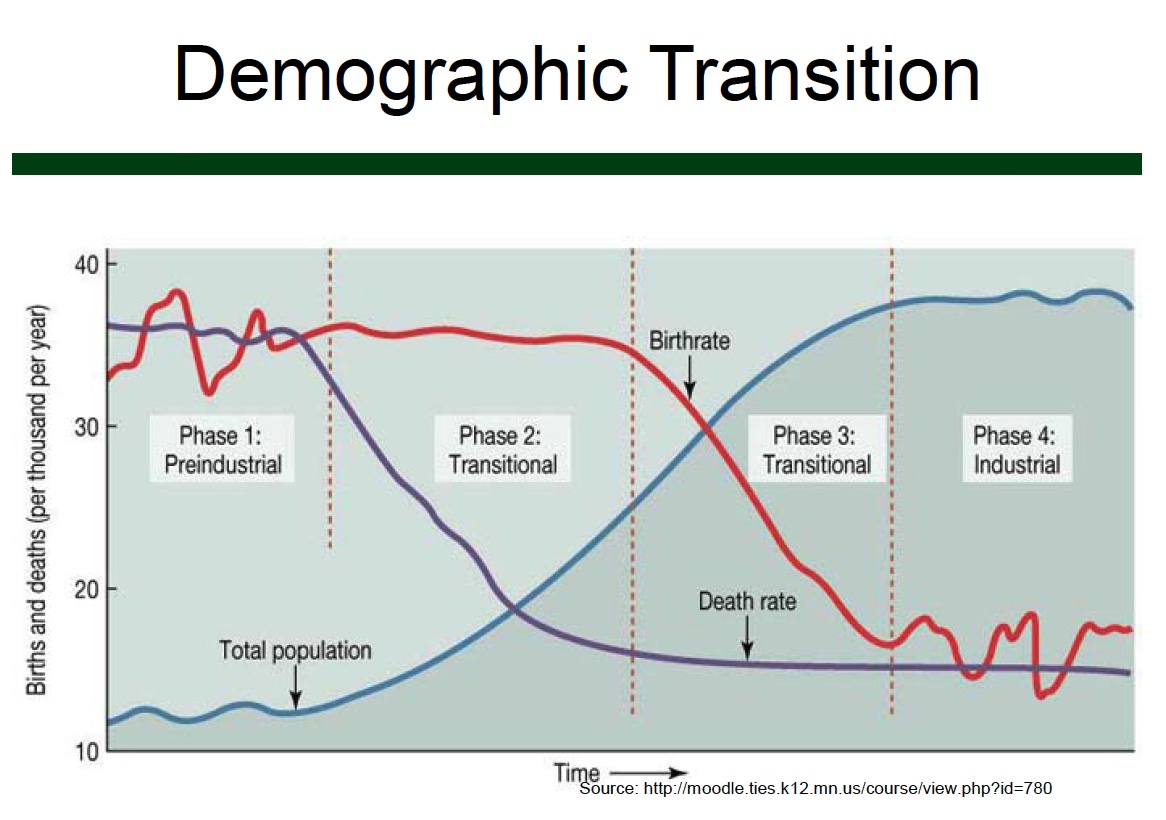
| Week 10 | Demographic transition: Four stages •
Stage 4-Low birth rates and low death rates
|
||
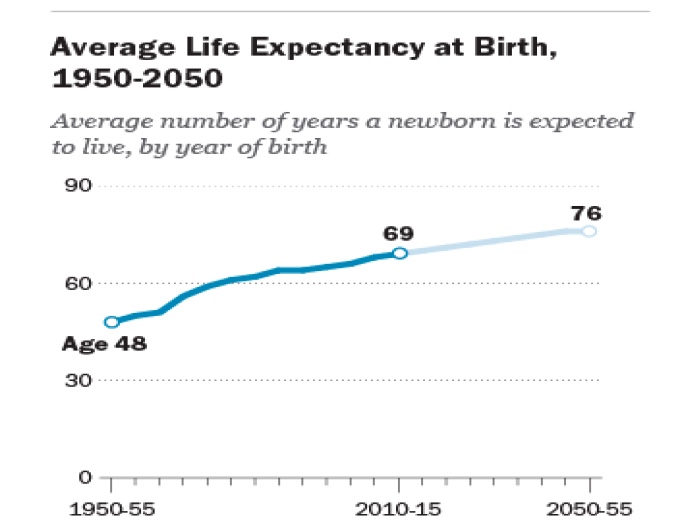
| Week 11 | January 6, 2021 | Global life expectancy was 71 years (2013), up to 25 years from 46.5 years in 1950-1955.
• Life expectancy by 2050: – Developing countries: 71.5 years for males and 75.8 years for females. – Developed countries: 79 years for males and 84.9 years for females.
|
|
| Week 12 | January 6, 2021 | By 2050 global urbanization is expected to rise to 70%.
Resource consumption and waste production rates are about
32 times higher
in developed countries than in developing countries.
|
|
| Week 13 | January 6, 2021 | Information and Communication Technologies
Convergence refers to the blurring of boundaries between media, information technology, and telecommunications |
|
| Week 14 | The information age is the time characterized by the proliferation of information and the ability to transfer, share, and instantly access information that previously has been difficult.
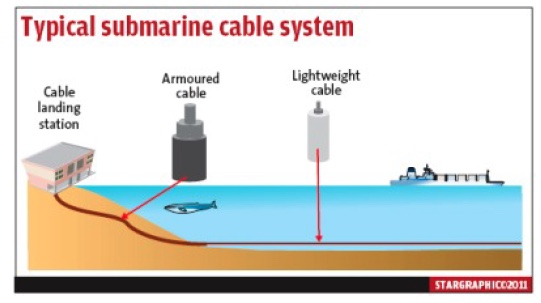
A submarine communication cable is a cable laid on the sea bed between land-based stations to carry telecommunication signals across the ocean.
What is the current penetration of the Internet and the world.
|
||
| Week 15 | International Telecommunication Union (ITU)
|
||
| Week 16 | |||